

 EN
EN
 English
 Español
 中文
中文Multi-layer products are rarely defined by a single material. Outdoor covers, protective bags, luggage, upholstery, and industrial textiles often combine a structural base, a functional coating, and an additional lining or surface layer. Each component contributes to the finished product's behavior, making material compatibility an important part of product development.
China polyester fabric is worth considering in these designs because polyester textiles are available in different yarn counts, weave structures, weights, and finishing options. Their dimensional stability and versatility make them suitable for various composite constructions. However, the final result depends on how the polyester base interacts with the other layers, the bonding method, and the conditions in which the finished product will be used.
Understanding these relationships helps product designers establish more practical specifications before moving from prototype development to bulk manufacturing.
1. The Role of Polyester in a Multi-Layer Structure
Polyester fabric can serve as a reinforcing substrate, an exterior textile, or an intermediate layer between other materials. Its function depends on the product's construction and the properties required from each surface.
Structural support and dimensional stability
Woven polyester uses warp and weft yarns arranged in an interlaced structure. This construction can provide tensile support and help a product maintain its intended shape. The actual performance varies according to yarn strength, thread density, weave pattern, and finishing treatment.
During product assembly, dimensional stability matters because stretching or shrinkage can affect panel alignment, seam placement, and the fit between components. Heat setting and other finishing processes may help control dimensional changes, although the results depend on the fabric specification and processing conditions.
Compatibility with additional layers
Polyester may be combined with polyurethane (PU), polyvinyl chloride (PVC), foam, protective films, or textile linings. These combinations allow manufacturers to build products with different surface and structural characteristics.
- Base fabric: Provides textile reinforcement and helps distribute mechanical loads.
- Coating or film: Can provide water resistance, surface protection, or a specified finish.
- Foam or cushioning layer: Adds thickness, padding, or impact absorption, depending on its composition.
- Inner lining: Creates a finished interior surface and may improve handling or protect stored items.
These components must work together rather than being evaluated independently. Textile construction, coating penetration, surface preparation, and bonding conditions can all influence the performance of a layered material. Technical literature on textile structures and coating processes also highlights the importance of substrate porosity, fiber characteristics, and adhesion.
2. How Fabric Weight and Weave Affect Layered Products
Two polyester fabrics may look similar but behave differently after additional materials are attached. Fabric weight and weave structure are useful starting points for understanding these differences.
| Fabric Parameter | Potential Effect on Product Design | Design Consideration |
| Fabric weight (GSM) | Influences material mass and overall product weight | Account for the weight of every added layer |
| Yarn denier | Describes the linear density of the yarn | Evaluate alongside yarn strength and weave construction |
| Weave structure | Affects surface appearance, flexibility, and mechanical behavior | Match the construction to cutting and assembly requirements |
| Fabric thickness | Influences the total material profile and product dimensions | Allow for coatings, adhesives, foam, and lining |
| Surface finish | Can affect appearance, friction, and bonding compatibility | Confirm suitability for the intended adhesive or coating |
| Dimensional stability | Influences alignment during assembly and subsequent use | Check shrinkage and deformation under relevant conditions |
Fabric weight should be assessed as part of the complete assembly. A lightweight polyester face fabric may be suitable for a product with substantial internal reinforcement, while a heavier woven substrate may be appropriate for an exterior panel exposed to repeated contact. Neither option is automatically suitable for every layered construction.
3. Coating and Lamination: Two Different Design Approaches
Coating and lamination are common ways to add functionality to a textile, but they create different material structures.
Coated polyester
A coating is applied to the textile surface and may penetrate part of the woven structure. PU and PVC coatings are used in products requiring particular surface properties, including water resistance and cleanability. The result depends on coating formulation, application conditions, and the polyester substrate.
Laminated polyester
Lamination joins separate material layers using an adhesive or bonding process. A polyester textile may be bonded to a film, foam, or another fabric to achieve a specific combination of surface appearance, cushioning, and barrier performance.
Both approaches require attention to adhesion and flexibility. A material that performs well in a flat sample may behave differently around corners, seams, folded edges, or curved product panels.
- Coating evaluation: Check coating uniformity, adhesion, surface finish, and resistance to repeated flexing.
- Lamination evaluation: Examine peel strength, bond consistency, layer alignment, and resistance to delamination.
- Finished-product evaluation: Test seams, folds, edges, and connection points rather than relying only on flat fabric samples.
4. Where Multi-Layer Polyester Products Are Used
Different applications place different demands on the textile assembly. Product developers should define the main function of each layer before specifying the base fabric.
Protective bags and luggage
These products may combine an exterior polyester textile, internal reinforcement, foam padding, and a lining. Designers need to balance abrasion resistance, seam strength, product weight, and the ability to maintain shape during handling.
Outdoor covers and storage products
Outdoor applications may require a coated polyester surface to resist rain and splashes. UV exposure, temperature variation, wind loading, and repeated folding also deserve attention. Waterproof performance should be verified through an appropriate test rather than inferred from the coating's appearance.
Upholstery and padded products
Upholstery constructions may combine a polyester face fabric with foam and a backing layer. Surface wear, color consistency, tactile properties, and dimensional stability become important considerations. The bonding method should accommodate the intended curvature and compression of the finished product.
Industrial protective textiles
Industrial covers and equipment enclosures may require reinforced polyester, a polymer coating, or a laminated barrier. Buyers should define the expected loads, chemical exposure, temperature range, and relevant safety requirements before approving a material construction.
5. Testing the Complete Assembly Before Production
Material specifications provide a starting point, but a layered product should be evaluated as a complete assembly. Individual layers may pass their own inspections while the combined construction still experiences bonding problems, uneven deformation, or seam failure.
A practical evaluation plan may include:
- Tensile and tear testing: Assess the fabric's resistance to pulling forces and tear propagation.
- Peel or adhesion testing: Measure the bond between coated, laminated, or bonded layers using an appropriate method.
- Water penetration testing: Confirm the barrier performance required for the intended environment.
- Flex testing: Examine whether folding or repeated bending causes cracking, separation, or surface damage.
- Dimensional checks: Measure shrinkage, distortion, and alignment after relevant processing or conditioning.
- Seam and edge inspection: Check areas where stitching, welding, or adhesive bonding may concentrate stress.
Test methods and acceptance criteria should match the intended product. For example, a water-resistant storage cover and a padded carrying case have different functional requirements and should not be evaluated against identical performance targets without justification.
6. Specification Details for Custom Multi-Layer Projects
Clear purchasing specifications help fabric suppliers and product manufacturers coordinate material development. A request that simply states “polyester fabric” leaves several important construction variables undefined.
Buyers preparing a custom project should consider documenting the following information:
- Fiber composition and yarn denier.
- Weave structure, finished weight, and thickness tolerance.
- Required color, surface texture, and finishing treatment.
- Coating or lamination type and the intended bonding method.
- Roll width, cutting direction, and expected material consumption.
- Required performance tests and acceptance criteria.
- Sample approval procedures and bulk-order inspection requirements.
Prototype testing can reveal whether the selected polyester construction works with the complete product design. Adjustments to fabric weight, coating, adhesive, or backing material may be necessary before production specifications are finalized.
Multi-layer product design depends on more than the choice of an exterior textile. Polyester fabric can provide structural reinforcement, dimensional stability, and a versatile base for coatings, films, foam, and lining materials. Its actual contribution depends on the yarn construction, weave, finishing process, and compatibility with adjacent layers.
By defining the purpose of each component, documenting measurable fabric requirements, and testing the finished assembly, product developers can make more informed material decisions. A well-planned specification also gives buyers and suppliers a shared reference for sample evaluation, production consistency, and quality control.
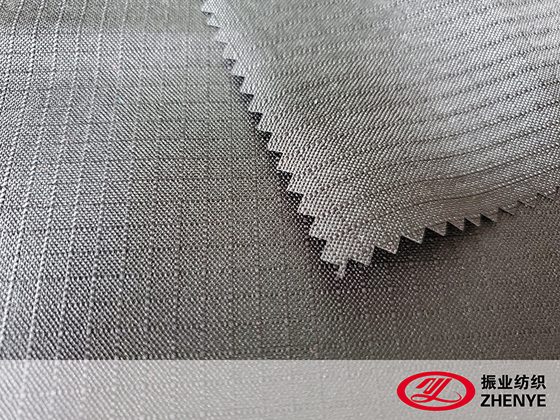
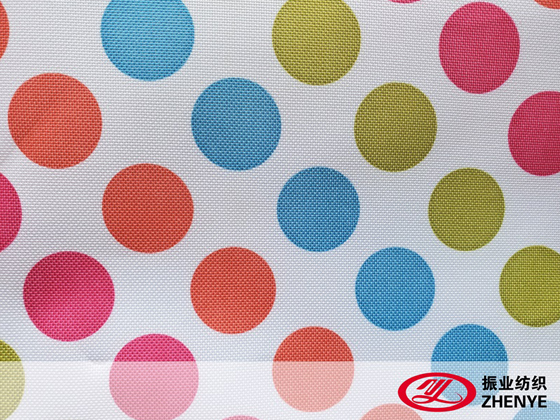
-1.jpg "300D Oxford Fabric")
-1.jpg "ZY-677 600D Linen Type Cationic Fabric (WR)")
-2.jpg "ZY-5768 600D Linen Type Cationic Fabric (WR)")
-1.jpg "Linen Type Cationic Fabric Pvc")

