

 EN
EN
 English
 Español
 中文
中文Types of 600D Polyester Waterproof Fabric on the Market
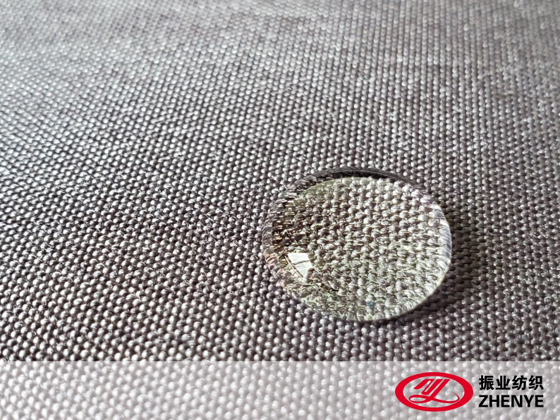
You see 600D polyester everywhere—backpacks, tents, motorcycle covers, pet carriers. The "600D" means 600 denier, which refers to the thickness of the individual polyester fibers. Denier is a weight measurement: 600D means 600 grams per 9,000 meters of fiber. That puts it in the mid-to-heavy range for polyester, heavier than 300D (lightweight) but lighter than 1200D (tank-like). Here are the common types you'll actually find.
PVC-coated 600D polyester: A layer of polyvinyl chloride (PVC) is laminated onto the back of the fabric. This is the classic "tarpaulin" feel—stiff, plastic-like, and completely waterproof. Water column rating typically exceeds 5,000 mm (test method AATCC 127). Used for truck covers, construction tarps, and heavy-duty outdoor storage. The downside: PVC makes the fabric less breathable and stiffer at low temperatures (below -10°C, it cracks rather than bends).
PU-coated 600D polyester (standard waterproofing): A polyurethane coating replaces PVC. Much more flexible, especially in cold weather. Breathability is better (moisture vapor transmission rate around 500–1,500 g/m²/24hr). Water column rating ranges from 1,500 mm to 8,000 mm depending on coating thickness. This is what you find on most backpacks, camera bags, and basic rain covers. The coating wears off after 2–5 years of use, especially at fold lines.
2000mm, 5000mm, and 8000mm rated versions: These numbers refer to hydrostatic head pressure—how tall a column of water the fabric can hold before leaking. 2000mm is light rain resistant (umbrellas, light daypacks). 5000mm handles moderate rain for an hour or two (camping gear, motorcycle covers). 8000mm is heavy rain resistant for extended periods (tent fly sheets, marine covers). The rating is measured under laboratory conditions, so real-world performance can vary.
DWR-coated 600D without membrane: Durable Water Repellent (DWR) is a surface treatment, not a coating. Water beads up and rolls off, but if you sit on a wet surface, moisture will eventually soak through. DWR alone is not fully waterproof—it's water-resistant. You'll see this on soft-sided coolers and some budget backpacks. The DWR wears off after 10–20 washes or heavy abrasion.
Material Characteristics of 600D Polyester Waterproof Fabric
Breaking strength and abrasion resistance. 600D polyester has a breaking strength of roughly 200–300 pounds (about 890–1,335 N) per inch of width in the warp direction, and slightly less in the weft. To put that in context, a 2-inch-wide strap of 600D can hold a 500 lb person theoretically, but the stitching would fail first. Abrasion resistance is measured by the Martindale test; 600D typically survives 15,000–25,000 cycles before showing visible wear. That's why it's used for luggage and outdoor gear—it holds up to being dragged across concrete or brushed against rocks.
Waterproofing mechanism. The fabric itself is not waterproof. Woven polyester fibers leave microscopic gaps between them. Water passes through these gaps by capillary action. The waterproofing comes entirely from the coating or laminate applied to the surface. Once that coating is scratched or worn through, water will leak at that exact point. So a 600D backpack with a small scuff mark on the bottom will stay dry except right at that scuff—where a drop will slowly wick through over an hour or two.
Weight and thickness. A square meter of uncoated 600D polyester weighs about 180–220 grams. Add a PU coating (30–60 g/m²) and you're at 210–280 g/m². Add PVC (100–200 g/m²) and the weight climbs to 280–420 g/m². Thickness ranges from 0.45 mm (uncoated) to 0.9 mm (heavy PVC coating). That's why a PVC-coated 600D tarp feels much heavier and stiffer than a PU-coated backpack.
UV resistance (or lack thereof). Untreated polyester degrades under UV exposure. After 500 hours of QUV accelerated weathering (simulating about 6 months of outdoor sunlight), untreated 600D loses 20–30% of its tensile strength. Add UV stabilizers (carbon black or other additives), and the loss drops to 5–10% over the same period. Many outdoor 600D fabrics include these stabilizers, but budget versions often omit them. You can spot the difference: UV-stabilized fabric feels slightly waxier and sometimes has a faint gray undertone.
Water column rating breakdown. Here's what the numbers actually mean in real use: 1,000–2,000 mm (light rain, mist, brief exposure). 3,000–5,000 mm (moderate rain for 1–2 hours). 6,000–10,000 mm (heavy rain for several hours). Above 10,000 mm (torrential rain, submersion resistance). For comparison, a cheap tent fly might be 2,000 mm; a good backpack is 3,000–5,000 mm; a dry bag is 10,000+ mm.
Breathability and condensation. This is the hidden trade-off. A fully waterproof fabric (PU or PVC coated) has near-zero breathability. If you put hot, moist air inside (like from a sweaty back or a warm sleeping bag), that moisture has nowhere to go. It condenses on the inside of the fabric. So while rain stays out, sweat stays in. That's why expensive outdoor gear uses breathable membranes (Gore-Tex, etc.), not simple coated 600D. For applications where condensation isn't an issue (truck covers, storage bags), coated 600D works fine.
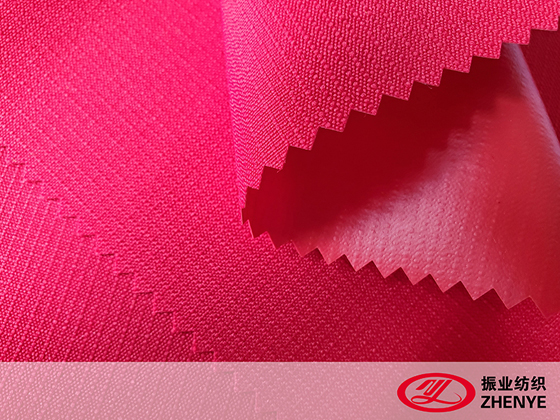
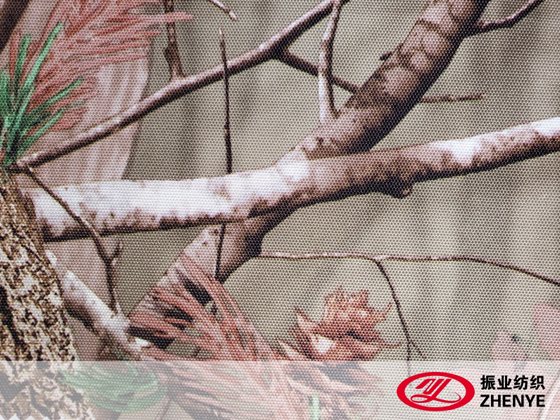
.jpg "300D Oxford Fabric PU")
.jpg "600D Oxford Fabric PVC Coating")
-1.jpg "300D Linen Type Cationic Fabric (PVC)")
-2.jpg "ZY-5768 600D Linen Type Cationic Fabric (WR)")

