
 EN
 English
 Español
 中文
Developing a distinctive textile product often starts with a simple question: how closely can the fabric match the intended design? Color, texture, weight, width, and surface performance all influence the final result. For brands and product manufacturers, custom polyester fabric offers multiple ways to adjust these characteristics according to product specifications, target markets, and manufacturing requirements.
Customization extends beyond choosing a color from a standard catalog. Depending on the fabric construction and available finishing processes, buyers may request different weave structures, printed patterns, coatings, surface textures, and functional treatments. Understanding these options helps designers turn an initial concept into a practical material specification.

1. Color Customization Goes Beyond Standard Shades
Color plays an important role in brand identity, product collections, and visual consistency. Custom polyester fabrics can be developed in specific shades to match a product's design direction or an existing brand color system.
Common color development options
- Pantone color matching: Provides a reference for developing a target shade, although the final result depends on the textile, dyeing process, and finishing treatment.
- Physical sample matching: Allows buyers to submit an existing fabric or color swatch for comparison and development.
- Seasonal color collections: Supports product lines that require coordinated colors across multiple designs.
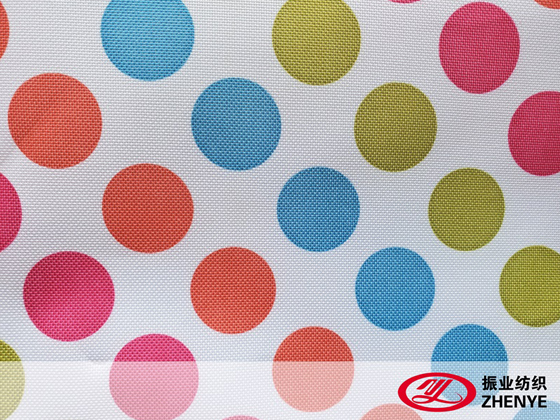
- Multi-color printing: Creates detailed graphics, gradients, decorative motifs, or branded patterns on suitable polyester substrates.
Color approval should account for the actual production material. A digital screen image cannot fully reproduce the appearance of a textile under different lighting conditions. Laboratory samples and physical fabric swatches provide a more practical reference before bulk production begins.
2. Can Fabric Weight and Width Be Adjusted?
Fabric dimensions influence material consumption, product weight, cutting layouts, and assembly methods. Custom specifications allow manufacturers to match the textile to the intended application rather than adapting every product to a fixed fabric format.
| Customization Item | Design Impact | Information to Confirm |
| Fabric weight (GSM) | Affects material mass, drape, and perceived substance | Target weight and acceptable tolerance |
| Fabric width | Influences cutting layouts and material utilization | Finished width and usable width |
| Yarn denier | Changes yarn linear density and may affect fabric construction | Required yarn specification and application |
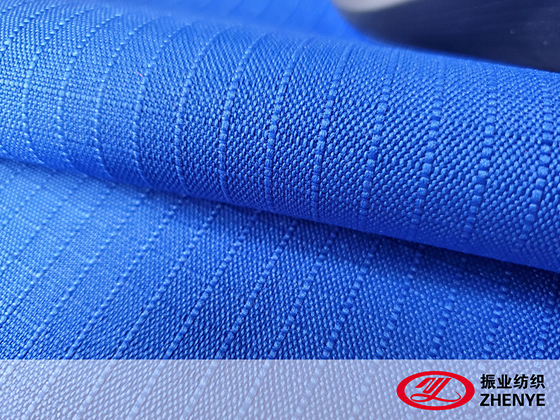
| Weave structure | Influences surface appearance and mechanical behavior | Plain, twill, Oxford, or another suitable construction |
| Thickness | Affects the physical profile of the finished material | Target measurement and test method |
Lightweight polyester may suit linings, printed displays, and products requiring easy handling. Heavier constructions may be appropriate for bags, upholstery, protective covers, or other applications requiring additional structure. The appropriate specification depends on the intended use rather than GSM alone.
Buyers should also confirm whether the requested dimensions refer to the unfinished textile or the finished fabric after dyeing, coating, or other processing. This distinction can affect cutting plans and finished-product measurements.
3. Surface Texture Creates Different Product Experiences
The appearance and feel of polyester fabric can be changed through construction and finishing. These details influence how a product looks, feels, and interacts with other materials during use.
Available texture and finishing directions
- Brushed surfaces: Create a softer, raised texture for suitable apparel, bedding, and home textile applications.
- Embossed patterns: Add raised or recessed visual details to compatible fabrics or coated surfaces.
- Jacquard construction: Integrates patterns into the textile structure instead of relying exclusively on surface printing.
- Matte or glossy finishes: Change the visual character of the fabric for different product styles.
- Printed graphics: Support custom artwork, decorative designs, and branded imagery.
Each method has different production requirements. Jacquard designs depend on weaving capabilities, while printing requires a compatible substrate and suitable ink or dye technology. Embossing and surface treatments may also affect the fabric's hand feel and dimensional characteristics.
Requesting a sample with the intended finish helps designers evaluate texture, color, flexibility, and appearance before confirming the production specification.
4. Functional Treatments Expand Application Possibilities
Design freedom also involves adjusting fabric performance. Depending on the polyester construction, coating system, and treatment process, a textile may be developed to meet specific requirements beyond appearance.
| Functional Option | Potential Purpose | Key Consideration |
| Water-repellent finish | Helps water bead on the fabric surface | Performance depends on the treatment and test conditions |
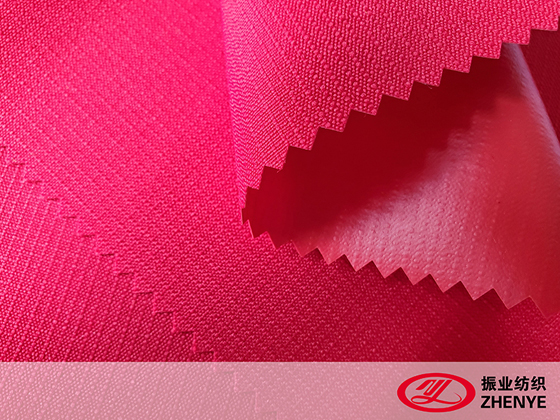
| PU or PVC coating | Can improve resistance to water penetration | Coating weight, adhesion, and flexibility require evaluation |
| UV-resistant treatment | Helps address exposure to ultraviolet radiation | Suitability depends on the exposure level and required service life |
| Flame-retardant treatment | Supports specified fire-performance requirements | Applicable standards and test results must be confirmed |
| Anti-static treatment | Helps manage static charge under defined conditions | Performance depends on the treatment and operating environment |
These options are not automatically available for every fabric. Some treatments may alter softness, color, coating adhesion, or breathability. Buyers should identify the essential performance requirements early so the material construction can be developed around them.
5. How Custom Polyester Fabric Supports Different Industries
Customization becomes particularly useful when different products require different combinations of appearance, structure, and performance.
Bags and luggage
Bag manufacturers may specify particular yarn deniers, weave structures, colors, printed graphics, or PU and PVC coatings. The material should be evaluated for abrasion, tear resistance, seam construction, and the intended carrying conditions.
Home textiles and upholstery
Home textile designers may prioritize softness, color coordination, decorative patterns, and suitable fabric weight. Brushing, jacquard weaving, and printing can help create distinct product collections while maintaining consistent design references.
Outdoor and protective products
Outdoor covers and protective textiles may require coated polyester, specific roll widths, weather-related performance, and resistance to repeated folding. The final specification should reflect actual exposure conditions and the product's construction method.
Promotional and display materials
Printed polyester textiles can support exhibition graphics, banners, backdrops, and branded displays. Fabric weight, print compatibility, color reproduction, and the display system's dimensions should be considered together.
6. Turning a Design Concept into a Production Specification
Extensive customization is useful only when the requested details can be translated into measurable requirements. A structured development process helps buyers communicate expectations and assess whether the finished material matches the original concept.
- Define the application: Explain how the finished product will be used, handled, stored, or exposed to environmental conditions.
- Prepare reference materials: Provide artwork, Pantone references, physical swatches, or an existing fabric sample.
- Document technical requirements: Specify composition, weave, GSM, width, coating, finishing, and required tolerances.
- Approve a development sample: Review the actual material for color, texture, dimensions, and relevant performance properties.
- Establish quality criteria: Agree on inspection methods, acceptable variations, packaging, and bulk-order requirements.
Buyers should also confirm MOQ, sampling charges, production schedules, and the availability of specialized finishes. These commercial details vary according to the construction, color, processing requirements, and order volume.
Custom polyester fabric offers considerable design flexibility through adjustments to color, weight, width, weave, texture, printing, coating, and functional treatments. The available choices depend on the base material and the manufacturing processes required to achieve the intended result.
For product developers, the practical goal is to balance visual identity, technical performance, and production feasibility. A clear specification, followed by sample evaluation and agreed quality checks, helps transform creative ideas into materials suitable for commercial manufacturing. With the right combination of construction and finishing, polyester fabric can support a wide range of product designs without treating every application as the same material requirement.