
 EN
 English
 Español
 中文
Durability is a major consideration in the sourcing of materials for backpacks, travel bags, outdoor equipment, tents, and protective covers. Buyers often pay close attention to tear resistance because a small cut or puncture can become a larger problem during transportation or daily use. Ripstop Oxford Fabric addresses this concern through a reinforced grid construction designed to restrict the spread of tears across the fabric surface.
However, a visible ripstop pattern does not automatically guarantee strong performance under every working condition. Yarn thickness, fiber composition, weaving density, fabric weight, coating treatment, and manufacturing consistency all influence the final result. At Zhenye, we believe that evaluating ripstop materials requires more than checking their appearance. Buyers need to understand how the construction performs under mechanical stress and whether the finished fabric matches the requirements of its intended application.
1. How Does Ripstop Construction Limit Tear Expansion?
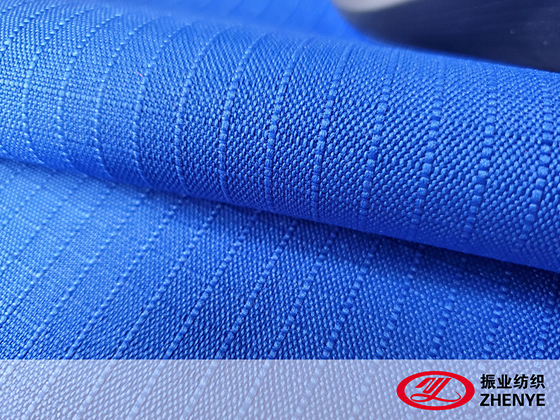
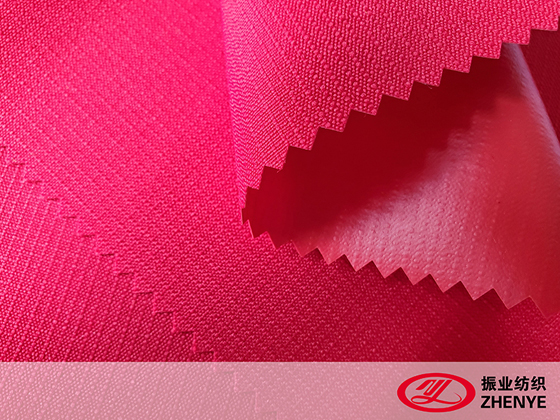
The defining characteristic of ripstop fabric is its reinforcement grid. During weaving, thicker or stronger yarns are inserted at regular intervals in the warp and weft directions. These yarns create a recognizable square or rectangular pattern across the surface.
The reinforced sections act as barriers that help prevent an initial tear from spreading freely. Rather than allowing a small cut to continue through a continuous area of ordinary yarns, the grid provides additional resistance at regular intervals.
Several construction details influence this performance:
- Reinforcement yarn thickness: Thicker reinforcement yarns can provide greater resistance against tear propagation, depending on their material and construction.
- Grid spacing: The distance between reinforced yarns affects the size of each grid section and the distribution of stress.
- Base fabric density: Warp and weft density influences fabric stability, flexibility, and mechanical behavior.
- Yarn composition: Polyester and nylon offer different combinations of strength, flexibility, moisture resistance, and weight.
Ripstop Oxford fabric combines the practical characteristics of Oxford-style woven materials with a reinforced grid structure. This combination makes it suitable for applications that require a balance between manageable fabric weight and resistance to tearing.
2. Does Laboratory Tear Resistance Reflect Actual Usage?
Laboratory testing provides measurable information about fabric performance, but test results do not represent every situation encountered during daily use. A fabric sample may achieve a satisfactory tear strength result under controlled conditions while experiencing different stress patterns in a finished bag or outdoor product.
Several factors explain this difference:
Localized Pressure and Sharp Objects
A bag containing metal tools, camping accessories, or irregularly shaped equipment may experience concentrated pressure at particular points. A sharp object can create an initial puncture, while repeated movement may gradually enlarge the damaged area. Ripstop reinforcement helps restrict tear expansion, but it cannot make the material completely puncture-proof.
Repeated Folding and Bending
Outdoor bags, luggage, and protective covers are frequently folded, compressed, and unfolded. Repeated bending can affect yarns and surface coatings, particularly around corners and frequently handled sections. A fabric with satisfactory initial tear resistance may show different results after extended mechanical use.
Load Concentration Around Seams
Fabric strength is only part of the finished product's durability. Stitching holes, handle attachments, zipper openings, and reinforced corners create areas where mechanical stress can concentrate. A strong ripstop structure cannot compensate for unsuitable thread, weak stitching, or insufficient seam reinforcement.
At Zhenye, we recommend evaluating fabric samples alongside the intended product construction. This approach provides a clearer understanding of how the material will perform after cutting, sewing, coating, and assembly.
3. Which Technical Parameters Should Buyers Examine?
A purchasing specification should describe the complete fabric construction rather than relying on the term Ripstop Oxford alone. Different combinations of yarn size, density, weight, and finishing treatments can produce noticeably different results.
The following parameters deserve attention during supplier discussions:
| Technical Parameter | What It Indicates | Purchasing Consideration |
| Denier (D) | Linear density of the yarn | Confirm warp and weft yarn specifications. |
| Fabric Weight (GSM) | Mass per square meter | Compare weight against the finished product requirements. |
| Warp and Weft Density | Number of yarns per unit length | Check structural consistency and fabric stability. |
| Grid Spacing | Distance between reinforcement yarns | Review the reinforcement pattern and its suitability. |
| Tear Strength (N) | Resistance to tear propagation | Request separate warp and weft test results. |
| Coating Type | Surface or reverse-side finishing treatment | Check waterproofing, flexibility, and coating durability. |
For example, 300D and 600D polyester constructions may be considered for different bag and outdoor equipment applications. These denier values describe yarn linear density rather than complete fabric performance. A 600D specification does not automatically indicate a higher tear strength than every 300D construction. Yarn quality, density, reinforcement design, and finishing processes remain important.
Buyers should also distinguish between tensile strength and tear strength. Tensile testing measures the force required to break a fabric specimen under a specified loading method. Tear testing evaluates the force associated with propagating an existing cut or tear. Both measurements provide useful information, but they describe different mechanical properties.
4. Which Testing Standards Help Verify Tear Resistance?
Reliable testing gives purchasing teams a common basis for comparing fabric samples and checking supplier claims. At Zhenye, we recommend specifying the applicable testing method before sample approval or bulk production.
- ISO 13937-2: Determines the tear force of textile fabrics using the trouser-shaped test specimen method.
- ISO 13937-1: Covers the ballistic pendulum method for measuring tear force.
- ASTM D1424: Measures the tear resistance of fabrics using a falling-pendulum apparatus, commonly known as the Elmendorf method.
- ISO 13934-1: Measures the ideal force and elongation at ideal force using the strip method for tensile properties.
Test results should identify the method, specimen preparation, fabric direction, and testing conditions. Buyers should avoid comparing numerical results from different methods as though they were directly interchangeable.
Warp and weft results also deserve separate attention. A fabric may demonstrate different tear resistance in each direction because yarn arrangements and reinforcement patterns are not always identical. Checking both directions provides a more complete picture of its mechanical properties.
5. How Do Coatings Affect Ripstop Oxford Fabric Performance?
Coatings add functional properties to Oxford textiles, particularly for bags, tents, outdoor covers, and equipment exposed to moisture. PU, PVC, and other finishing treatments may improve water resistance, but they also change the weight, flexibility, surface feel, and mechanical behavior of the finished material.
PU Coating
PU coating is commonly used for outdoor and bag fabrics that require water resistance without an excessively rigid surface. The final performance depends on coating formulation, application thickness, and bonding quality. Buyers should examine coating adhesion and flexibility alongside the original fabric's tear strength.
PVC Coating
PVC coating is suitable for applications requiring a more substantial protective layer and higher resistance to water penetration. However, the added coating weight and stiffness may affect the handling characteristics of the finished Ripstop Oxford fabric. Flexibility under repeated folding and low-temperature conditions deserves attention for outdoor products.
Water Resistance and Tear Resistance Are Different Properties
A fabric with a high hydrostatic pressure rating does not necessarily provide strong tear resistance. Waterproofing evaluates resistance to water penetration, while tear testing examines mechanical damage. Both requirements should be defined independently in the purchasing specification.
We encourage buyers to request test results from the finished coated fabric rather than relying exclusively on uncoated base-fabric data. Coating and finishing processes can change the final physical properties.
6. Which Applications Benefit from Ripstop Oxford Construction?
The reinforced grid structure supports a range of applications where controlled tear propagation is an important material consideration. The appropriate construction depends on the expected load, environmental exposure, product weight, and manufacturing requirements.
- Backpacks and travel bags: Reinforcement can help limit tear expansion caused by friction, packed contents, and repeated handling.
- Camping equipment: Tents, storage bags, and outdoor accessories may benefit from a combination of manageable weight and reinforced fabric construction.
- Protective covers: Ripstop materials can provide additional resistance against tear propagation during folding, transportation, and outdoor exposure.
- Sports and utility bags: Equipment bags often experience repeated loading and movement, making fabric construction an important part of material evaluation.
- Outdoor accessories: Organizers, pouches, and storage products can use different ripstop specifications according to their intended working conditions.
Heavy-duty applications may require additional reinforcement around handles, attachment points, and high-load sections. Material selection should therefore consider the entire product design rather than fabric properties alone.
7. What Should Buyers Confirm Before Placing a Fabric Order?
Clear technical communication reduces misunderstandings between fabric manufacturers and downstream bag producers. A detailed specification also makes it easier to compare samples, confirm production consistency, and establish acceptance criteria.
At Zhenye, we suggest preparing the following information before requesting a quotation or sample:
- Fiber composition, such as polyester or nylon.
- Yarn denier in both warp and weft directions.
- Target fabric weight in GSM.
- Weaving structure and reinforcement grid spacing.
- Required width, color, and surface appearance.
- PU, PVC, or other coating requirements.
- Target tear strength and the corresponding testing standard.
- Water resistance, abrasion resistance, and other application-related requirements.
- Sample approval procedures and acceptable production tolerances.
Requesting a physical sample is also valuable. Buyers can inspect the grid pattern, fabric hand feel, thickness, coating uniformity, and compatibility with their cutting and sewing processes. A sample tested under the same conditions as the approved specification provides a more reliable reference for subsequent production batches.
A Reinforced Grid Needs Supporting Technical Performance
Ripstop Oxford fabric offers a practical construction for applications that require resistance to tear propagation, but its real-world performance depends on several interconnected factors. Reinforcement yarns, base-fabric density, fiber type, GSM, coating treatment, and finished-product construction all influence the final result.
Laboratory tear strength provides an important reference, yet buyers should also consider abrasion, tensile properties, coating durability, and seam performance. Testing the finished fabric against clearly defined requirements helps reduce material selection risks and supports more predictable production results.
At Zhenye, we welcome inquiries from bag manufacturers, outdoor equipment producers, and textile distributors seeking suitable Ripstop Oxford fabric specifications. Share your intended application, material requirements, and target performance standards with our team to discuss an appropriate fabric solution.