

 EN
EN
 English
 Español
 中文
中文For Oxford fabric, the yarns in both the warp (lengthwise) and weft (crosswise) directions are typically made from 300D filaments. The fabric construction is a plain weave or a basket weave where one warp yarn passes over one weft yarn in a repeating pattern. The use of 300D polyester produces a fabric with an intermediate thickness.
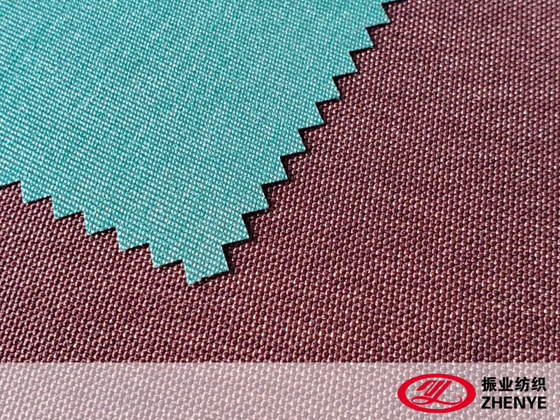
A typical 300D Oxford fabric has a thickness of 0.35 to 0.50 mm and a weight of 110 to 150 grams per square meter (gsm), depending on the density of the weave (number of yarns per inch). For comparison, 150D Oxford fabric weighs 70-90 gsm and is more suitable for lightweight linings, while 600D Oxford fabric weighs 180-240 gsm and is used for heavy-duty luggage. The "D" value alone does not determine fabric strength; the weave density (thread count) also significantly affects tear resistance and abrasion durability. A 300D fabric with a high thread count (e.g., 70 warp yarns per inch and 50 weft yarns per inch) can be stronger than a 400D fabric with a loose weave.
What are the common applications of 300D polyester Oxford fabric?
- Backpacks and daypacks: 300D Oxford is widely used as the main body fabric for lightweight backpacks, school bags, and hydration packs. The fabric provides sufficient abrasion resistance (typically 500-800 cycles on the Martindale abrasion test) for everyday use while remaining light enough (110-130 gsm) to keep bag weight below 300 grams for a 15-liter pack. The fabric is often coated with polyurethane (PU) on the inner surface to achieve a water resistance of 1,000-2,000 mm hydrostatic head.
- Camping tents and tarps: The fabric serves as the flysheet or inner tent material for budget to mid-range camping tents. A 300D Oxford with a 2,000 mm PU coating is adequate for light to moderate rain (up to 50 mm of rainfall per hour). For tent floors, 300D is considered entry-level; premium tents use 600D or 1,200D for floors. The fabric is also used for lightweight tarpaulins (3 m × 4 m sizes weighing 1.2-1.5 kg) for temporary covering of camping gear or firewood.
- Luggage covers and cosmetic bags: The fabric is used for suitcase covers (elasticated fabric that wraps around hardshell luggage) and hanging toiletry bags. Its abrasion resistance (200-300 cycles on the Wyzenbeek test) withstands the rubbing against airport conveyor belts and other luggage for approximately 50-100 travel trips. For cosmetic bags, the fabric is often laminated with a PVC or PE layer to make it waterproof and easy to clean.
How does water resistance differ from waterproofing in 300D Oxford fabric, and what do coating specifications mean?
Water resistance and waterproofing are distinct properties of 300D Oxford fabric. Water resistance refers to the fabric's ability to repel water for a limited time under low pressure. It is achieved through a durable water repellent (DWR) finish—a fluoropolymer coating applied to the outer surface. DWR-treated 300D Oxford causes water to bead up and roll off the surface, but if the fabric is submerged or subjected to water pressure (e.g., rain driven by wind at 20 km/h), moisture eventually penetrates through the weave. DWR finishes have a hydrostatic head rating of 500-800 mm and maintain effectiveness for 20-30 minutes of moderate rainfall (10-20 mm per hour). The DWR layer wears off after 10-20 wash cycles or after 6-12 months of use, requiring re-application with spray-on DWR products.
Waterproofing, in contrast, requires a continuous barrier such as a polyurethane (PU) or polyvinyl chloride (PVC) coating applied to the inner surface of the fabric. A 300D Oxford fabric with a 1,500 mm PU coating can withstand a 1.5-meter column of water without leakage (the hydrostatic head test, ISO 811). This is considered rainproof for light to moderate rain. For heavy rain (over 50 mm per hour) or for use in tents and backpacks exposed to sustained pressure (such as a backpack that contacts the wearer's back, creating pressure on the fabric), a hydrostatic head of 2,000-3,000 mm is recommended. A fabric labeled "waterproof" must typically achieve at least 1,500 mm hydrostatic head, but the coating also adds weight (20-40 gsm for PU coating) and reduces breathability. PU-coated 300D Oxford has a moisture vapor transmission rate (MVTR) of 500-1,000 g/m² per 24 hours, which is 70-80 percent lower than uncoated fabric, meaning sweat vapor does not pass through easily. For applications requiring both water protection and breathability (e.g., rain covers for hiking backpacks), a separate venting system or mesh panel is necessary because the PU-coated fabric itself is not breathable.
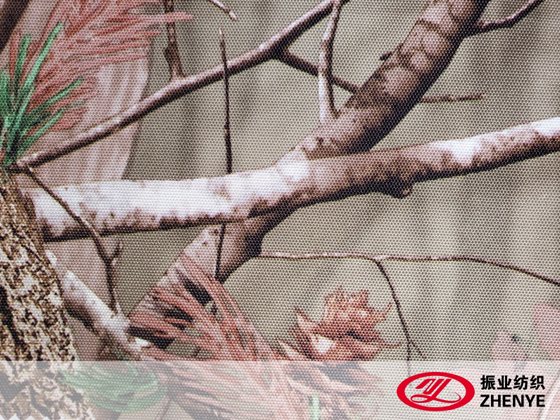
.jpg "300D Oxford Fabric PU")
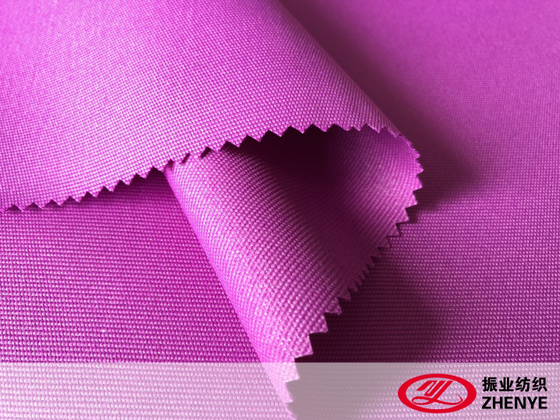
-1.jpg "300D Linen Type Cationic Fabric (PVC)")
-1.jpg "ZY-700 300D Linen Type Cationic Fabric PVC")
-2.jpg "ZY-5768 600D Linen Type Cationic Fabric (WR)")

