

 EN
EN
 English
 Español
 中文
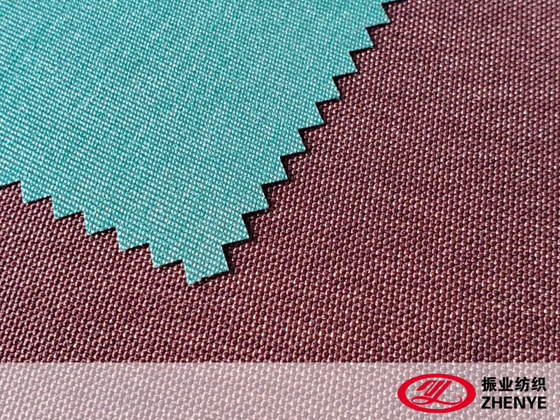
中文300D Oxford Fabric PU is no longer limited to traditional bag-making or simple protective covers. The material has gradually evolved into a functional textile platform used across mobility systems, modular equipment, and lightweight engineering structures. Built on 300 denier polyester yarn with a polyurethane coating, it delivers a controlled balance between flexibility, durability, and surface performance.
Structural evolution behind a simple fabric name
The value of 300D Oxford Fabric PU comes from how its structure is engineered rather than how it looks.
- Polyester 300D base yarn
- Medium-thickness filament structure
- Stable dimensional behavior under load
- Oxford basket weave
- Interlaced geometry distributes stress evenly
- Reduces risk of single-point tearing
- PU coating system
- Seals fabric surface without full rigidity
- Supports controlled waterproof performance
This layered structure turns the fabric into a semi-engineered composite rather than a basic textile.
Technical performance profile often overlooked
Most discussions focus on “waterproof” or “durable,” but real industrial value is defined by measurable behavior:
- Typical GSM range: 130–220 g/m² depending on coating density
- Yarn specification: 300D × 300D polyester construction
- Weave density control: adjusts tear propagation resistance
- Hydrostatic pressure capability: scalable via PU layer thickness
- Coating adhesion stability: affects long-term delamination risk
Even small changes in coating weight can significantly shift flexibility vs. rigidity balance, making customization critical in production.
Hidden design advantage: controlled deformation
Unlike rigid synthetic sheets, 300D Oxford Fabric PU is designed to deform predictably rather than resist deformation completely.
Key mechanical behaviors:
- Fold memory behavior
Returns to flat form after repeated folding cycles
- Stress dispersion
Force spreads across weave instead of localized damage
- Edge stability
Fraying resistance improves product lifecycle consistency
- Low creep under load
Maintains geometry in suspended or stretched applications
This is why it performs well in dynamic-use environments such as portable storage systems and collapsible structures.
Material engineering beyond traditional textile use
A significant shift is happening in how manufacturers use 300D Oxford Fabric PU:
1. Modular mobility systems
- Foldable cargo panels for e-bikes
- Lightweight protective shells for transport systems
- Expandable storage compartments
2. Temporary architectural elements
- Portable partitions for exhibitions
- Reusable shading membranes
- Lightweight acoustic barriers
3. Industrial packaging evolution
- Shock-absorbing outer skins
- Reusable transit covers
- Hybrid textile-plastic protective wraps
4. Consumer electronics protection layer
- Equipment transport sleeves
- Anti-scratch soft structural covers
- Reinforced accessory housings
The fabric is increasingly treated as a structural interface layer, not just a covering material.
PU coating behavior: more than waterproofing
PU coating is often simplified as a waterproof layer, but its functional impact is broader:
- Surface energy control
Influences water bead formation and runoff speed
- Flexibility retention
Maintains softness compared to PVC alternatives
- Print compatibility
Supports high-resolution branding and labeling
- Bonding capability
Works with heat sealing and lamination processes
Depending on coating thickness, the same base fabric can shift from semi-soft textile to semi-rigid shell material.
Manufacturing flexibility and processing compatibility
300D Oxford Fabric PU integrates well into multiple production workflows:
- Heat sealing assembly lines
- Ultrasonic bonding systems
- High-frequency welding applications
- Automated cutting and die-form shaping
- Multi-layer lamination structures
This compatibility reduces dependency on stitching-heavy designs and improves production scalability for mass manufacturing.
Environmental and system-level considerations
Modern material selection is no longer just about performance; system efficiency matters:
- Lower material weight reduces transport energy load
- PU coatings can be optimized for reduced solvent usage systems
- Polyester base allows partial recyclability pathways depending on coating structure
- Modular reuse reduces single-use textile waste streams
This positions 300D Oxford Fabric PU as a transitional material between traditional textiles and engineered polymer systems.
300D Oxford Fabric PU is increasingly functioning as a design platform material, not just a textile specification. Its value lies in adaptability—allowing engineers and product designers to tune flexibility, waterproofing, rigidity, and surface behavior within a single material family.
As product ecosystems move toward modular construction and lightweight structural systems, this fabric continues to expand beyond traditional expectations, quietly becoming part of industrial design evolution rather than staying in the textile category alone.
.jpg "600D Oxford Fabric PU (Cross Weave)")
.jpg "600D Oxford Fabric PVC Coating")
-1.jpg "300D Linen Type Cationic Fabric (PVC)")
-1.jpg "600D Linen Type Cationic Fabric PVC")
-1.jpg "ZY-700 300D Linen Type Cationic Fabric PVC")
-1.jpg "1000D Linen Type Cationic Fabric (WR)")

