
 EN
EN
 English
 Español
 中文
中文The evolution of textile engineering is pushing traditional fabrics into new application territories, and 600D Oxford Fabric PU is increasingly positioned as more than just a durable base material. Recent developments show it being integrated into structural textiles where performance predictability, layered functionality, and design adaptability matter as much as strength.
Material logic shifting from “fabric” to “system layer”
Modern product design no longer treats fabric as a single layer. In many industrial applications, 600D Oxford Fabric PU now functions as a carrier layer for multi-functional surface systems.
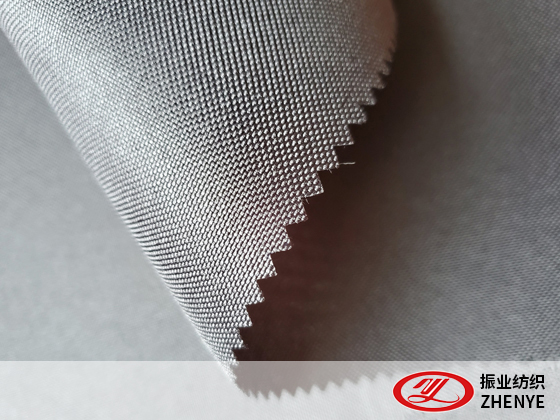
- Base weave: 600D polyester Oxford structure
- Coating system: PU (polyurethane) film layer
- Typical fabric weight range: 200–300 gsm depending on coating density
- Yarn structure: 600D x 600D high-density filament yarn
This layered architecture allows the fabric to act as a foundation for waterproofing, abrasion resistance, and even printable functional surfaces, rather than just a protective textile.
Micro-geometry advantage from Oxford weave
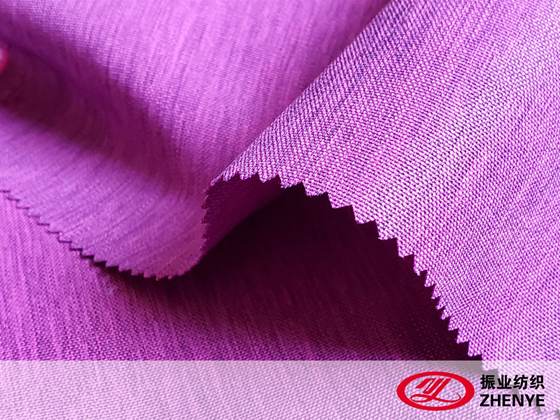
The Oxford basket weave structure creates a controlled surface topology that is increasingly valuable in technical manufacturing.
Key structural effects:
- Micro air channels formed between interlaced yarn bundles
- Stable tension distribution under repeated folding
- Reduced deformation under load compared with plain weave fabrics
- Improved coating anchoring surface for PU adhesion
Instead of being “just strong,” the structure becomes predictably deformable, which is important for automated cutting and high-speed sewing systems.
PU coating as a functional interface, not just waterproofing
The PU layer on 600D Oxford Fabric is no longer only evaluated by water resistance. It is now being used as a functional interface layer.
Typical engineered properties:
- Hydrostatic head capability commonly reaching 1,000–3,000 mm depending on coating mass
- Adjustable coating thickness between ~50–200 g/m²
- Controlled flexibility vs stiffness balance
- Surface compatibility with lamination, printing, and heat sealing
This allows manufacturers to “tune” the fabric behavior instead of relying on a fixed material profile.
Emerging application shift: modular textile structures
A noticeable trend is the use of this fabric in modular and replaceable systems rather than permanent products.
New usage directions include:
- Snap-fit outdoor equipment shells
- Replaceable protective panels for soft equipment housing
- Foldable logistics containment systems
- Hybrid soft-rigid protective enclosures
Instead of permanent durability, the focus is shifting toward repairability and modular swapping, where 600D Oxford PU acts as the standardized skin layer.
Production stability becomes a key selling parameter
Beyond performance, industrial buyers increasingly prioritize consistency across batches.
Typical production-controlled parameters:
- Width stability: ±1.5 cm tolerance
- GSM deviation control: ±10–15 g/m² range
- Colorfastness targeting Grade 4–5 levels in dyed variants
- Coating uniformity monitored via knife-over-roll or similar systems
These factors matter more than raw strength in automated manufacturing environments where cutting precision depends on repeatability.
Design implication: visible texture as branding element
A less technical but increasingly important shift is aesthetic exploitation of the weave pattern itself.
Designers are using:
- Visible Oxford grid texture as surface identity
- Matte PU finishes instead of glossy coatings
- Color blocking using coating contrast layers
- Minimal stitching exposure to highlight fabric geometry
The material is no longer hidden under design—it becomes part of the visual identity.
The role of 600D Oxford Fabric PU is moving from a conventional durable textile toward a configurable engineering material. Its value is no longer defined only by resistance or waterproofing, but by how precisely its structure, coating system, and production stability can be controlled for modern manufacturing needs.
This shift explains why it continues to expand into new product categories where predictability and layered functionality matter more than traditional fabric classification.
.jpg "600D Oxford Fabric PVC Coating")
.jpg "600D Oxford Fabric PVC Coating (diamond)")
.jpg "1000D Oxford Fabric PU (WR)")
.jpg "600D Oxford Fabric PU (WR) ZY-501")
.jpg "600D Oxford Fabric PU ZY-501")