

 EN
EN
 English
 Español
 中文
中文What does "cationic" mean?
This is the chemistry part. Cationic dyeable polyester (often shortened to cationic or CD polyester) is a modified polyester fiber that accepts dye differently than standard polyester.
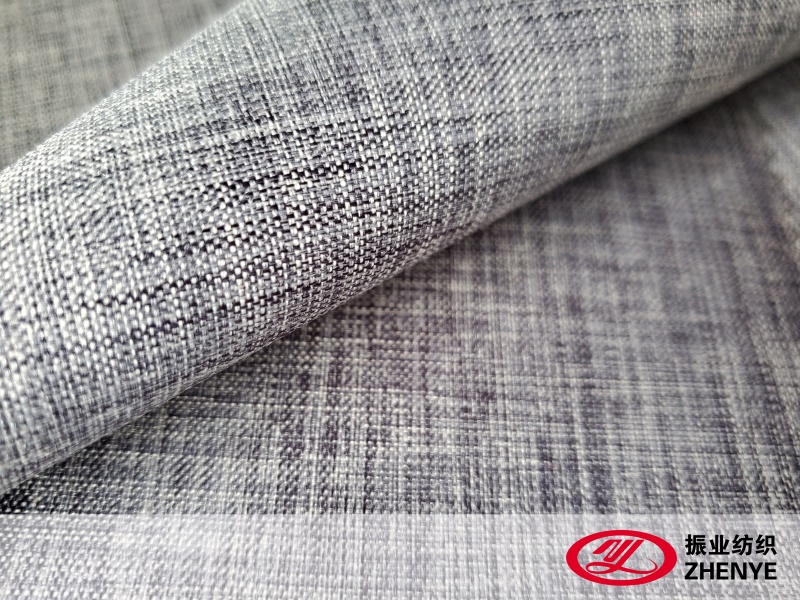
Standard polyester is hydrophobic (water-repellent) and requires high heat and special disperse dyes to take color. Cationic polyester has been modified with an additive (usually a sulfonate compound) that gives it a positive ionic charge. This allows it to bond with negatively charged dye molecules (cationic dyes) at lower temperatures.
The practical result is two things:
Richer, deeper colors. Cationic dyeable polyester can produce jewel tones—deep navy, burgundy, forest green—that standard polyester struggles to achieve without looking flat.
Two-tone or "cross-dye" effects. If you weave cationic yarns with standard polyester yarns in the same fabric, then use a dye bath, the cationic yarns take the dye and the standard yarns resist it. You get a subtle heather or marled appearance. This is common in "linen type" fabrics, where the irregular color adds to the natural look.
What does "(PU)" mean?
PU stands for polyurethane, which is the coating applied to the back of the fabric. The base fabric (the 300D cationic linen type) is woven polyester. On its own, it is not waterproof. Water will soak through between the yarns.
The PU coating is a thin layer (usually 0.1 to 0.3 mm) of polyurethane applied to the underside of the fabric. Once the coating is in place, the fabric becomes water-resistant and often fully waterproof for light to moderate rain.
A standard PU coating on 300D fabric typically offers a hydrostatic head rating of 800 to 2,000 mm (measured by AATCC 127 or ISO 811). That means it can withstand light rain for 30 to 60 minutes without leaking. It is not submersible (that requires a heavier coating or a different lamination), but it is fine for a backpack, a tote bag, or outdoor cushions that are not left out in heavy downpours.
Some manufacturers add a second layer of PU or a different coating for higher water resistance. You might see "3000mm" or "5000mm" ratings on better versions.
What are the pros and cons?
Pros:
- Good weight-to-strength ratio. Heavy enough to be durable, light enough to carry.
- Linen type texture hides small scuffs and dirt better than smooth fabric.
- Cationic dye gives deep, consistent color that does not fade quickly (UV resistance is moderate, not excellent).
- PU coating adds water resistance without making the fabric stiff.
- Costs less than natural linen or cotton canvas.
Cons:
- Not as abrasion-resistant as 600D or 900D fabric. Sharp edges can cut it.
- PU coating wears off over time (usually 2 to 5 years depending on use and folding). Once the coating cracks, the fabric will leak.
- Less breathable than uncoated fabric. Not ideal for clothing.
- Cationic dyeing is not a performance advantage for the end user; it is a manufacturing preference.
Where would you see this fabric used?
Backpacks and daypacks. Especially casual or urban styles that do not need heavy-duty ripstop.
Laptop bags and briefcases. The linen-type texture looks professional.
Outdoor cushion covers. The PU coating resists morning dew and light rain.
Pet carriers and leashes. The fabric cleans easily and does not absorb odors quickly.
Tool rolls and organizers. 300D is stiff enough to hold shape but flexible enough to roll.
How do you clean and maintain it?
The PU coating is the most delicate part. Do not machine wash or dry. Machine agitation will crack the coating in one or two cycles. Instead, wipe the fabric with a damp cloth and mild soap (dish soap works). Rinse the cloth and wipe again. Air dry away from direct heat.
If the coating starts to peel or become sticky, the fabric is near the end of its life. You can reapply a spray-on waterproofing product (like Nikwax TX.Direct) to extend it by a few months, but the peeling will continue.
For stains on the face fabric (coffee, dirt, ink), spot clean with a soft brush and a mixture of water and mild detergent. Do not scrub hard—the linen type texture can fuzz if abraded.
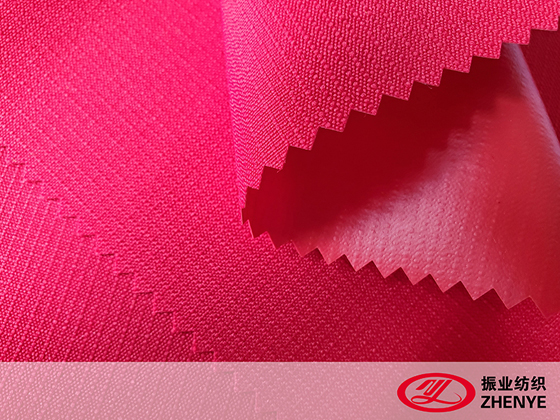
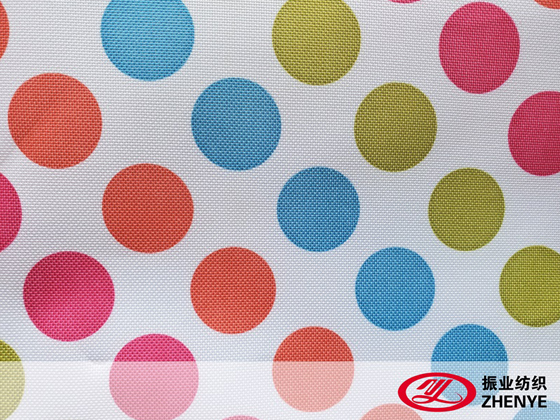
.jpg "300D Oxford Fabric PU")
.jpg "600D Oxford Fabric PU (Cross Weave)")
.jpg "600D Oxford Fabric PU (Plain weave)")
-1.jpg "300D Linen Type Cationic Fabric PVC")

