

 EN
EN
 English
 Español
 中文
中文Modern outdoor and industrial textiles are evolving fast, and 1200D Oxford Fabric has become a standout material for high-load applications. Built on a high-denier polyester base, it is widely recognized for structure stability, abrasion resistance, and adaptable coating systems such as PU or PVC finishes. Its performance is no longer limited to traditional bags or covers—it is increasingly used in engineered protective systems, modular storage, and reinforced transport solutions.
Unlike lighter denier fabrics, this specification focuses on structural reliability under repeated stress, making it relevant for environments where material failure is not acceptable.
Heavy-Duty Structural Behavior Under Load
1200D Oxford Fabric is defined by its thick yarn construction and tight weave architecture. Industry data shows typical specifications such as:
- Full polyester base yarn
- 1200D × 1200D weave structure
- Optional PU or PVC coating layers
- Weight range often around 400–550 gsm depending on finish
This combination produces a fabric that behaves more like a lightweight technical shield than a conventional textile.
Key performance traits include:
- High tensile stability under directional pulling
- Reduced deformation after repeated folding cycles
- Strong resistance to seam distortion in stitched assemblies
- Improved load distribution across surface layers
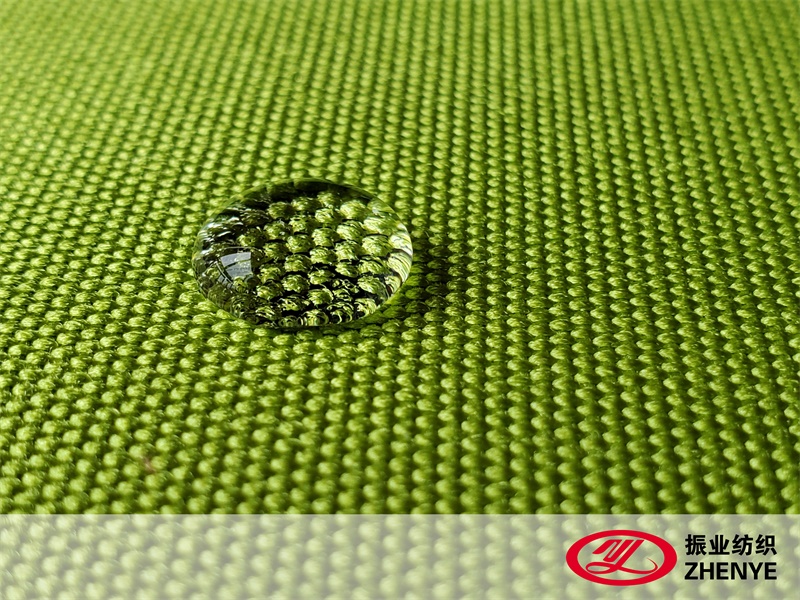
Surface Engineering Through Coating Systems
A defining advantage of 1200D Oxford Fabric lies in coating flexibility. Manufacturers typically apply PU or PVC coatings to adjust performance characteristics.
Common engineering options:
- PU coating: softer hand-feel, improved flexibility, lower weight impact
- PVC coating: rigid structure, higher waterproof barrier, enhanced abrasion resistance
- Dual-layer lamination: used in premium industrial covers
These coatings are not cosmetic—they directly influence permeability, stiffness, and long-term weather resistance. A PVC-backed version can significantly increase surface protection for static applications, while PU variants are preferred where foldability matters.
High-Load Application Scenarios Beyond Bags
Market usage is expanding beyond conventional luggage and backpack manufacturing. The material is now frequently adopted in structural protective systems.
Typical applications include:
- Industrial equipment shielding covers
- Automotive transport protection layers
- Reinforced storage containers and modular packaging
- Outdoor utility enclosures exposed to mechanical abrasion
- Heavy-duty tactical and logistics systems
The shift is driven by demand for textiles that behave predictably under repeated mechanical stress while remaining cost-efficient compared with composite laminates.
Performance Parameters That Matter in Real Use
Rather than focusing only on denier rating, performance evaluation increasingly considers multi-variable testing results.
Key measurable indicators include:
- Tear strength: reinforced by dense basket-style weave structure
- Abrasion cycles: suitable for repeated friction contact environments
- Hydrostatic resistance: dependent on coating thickness and uniformity
- Dimensional stability: reduced shrinkage under humidity and temperature variation
A 1200D base fabric with optimized coating can outperform lighter materials even in dynamic outdoor conditions where friction and moisture coexist.
Design Implications for Product Engineers
Product developers are using 1200D Oxford Fabric not only for durability, but also for predictable manufacturing behavior.
Engineering advantages:
- Stable cutting performance during automated production
- Reduced edge fraying during ultrasonic or heat sealing
- Compatibility with high-frequency welding (PVC variants)
- Consistent stitch retention under heavy seam loads
These properties allow designers to scale production without frequent material recalibration, especially in large-volume protective product lines.
Material Positioning in the Textile Spectrum
Within the Oxford fabric category, 1200D sits in the upper-middle to heavy-duty range. It is stronger than 600D and 900D variants, but still maintains manufacturability advantages compared to ultra-heavy ballistic constructions like 1680D.
This positioning makes it suitable for:
- Products requiring durability without excessive rigidity
- Applications balancing weight, cost, and structural strength
- Systems needing semi-flexible but reinforced textile skins
Emerging Trend: Hybrid Structural Textiles
Recent developments show increasing demand for hybridized versions of 1200D Oxford Fabric, combining:
- Ripstop reinforcement grids
- Anti-UV surface treatments
- Anti-mildew chemical finishing
- Low-temperature flexibility enhancement
These modifications are shifting the material from a standard textile into a functional engineering surface used in transport and industrial protection design.
1200D Oxford Fabric is no longer limited to traditional fabric classification. Its high-denier structure, customizable coating systems, and stable mechanical behavior position it as a functional material for demanding industrial and outdoor applications. As product design continues to prioritize durability with controlled weight, this fabric specification remains a practical solution for next-generation protective and structural textile systems.
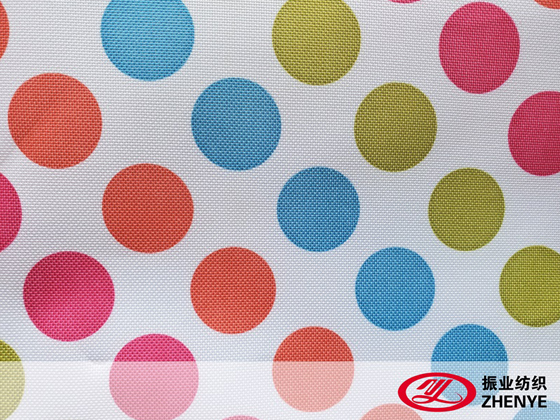
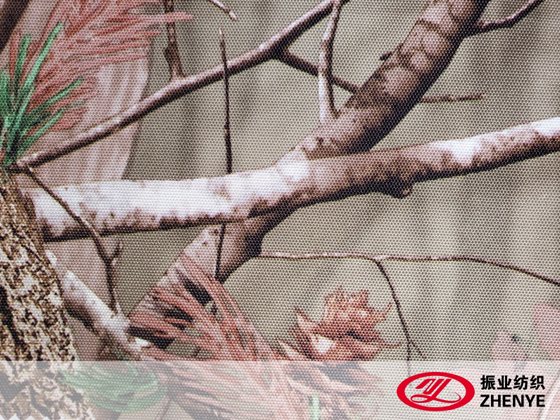
.jpg "300D Oxford Fabric PU")
-1.jpg "ZY-677 600D Linen Type Cationic Fabric (WR)")
-1.jpg "1000D Linen Type Cationic Fabric (WR)")
-1.jpg "600D Linen Type Cationic Fabric (WR)")

