

 EN
EN
 English
 Español
 中文
中文Industrial textile innovation has shifted toward materials that combine structural reinforcement with protective coatings. One Ripstop Fabric PVC is part of this evolution, blending ripstop weaving technology with a polymer-based surface layer designed for high-resistance environments. Its relevance is expanding beyond traditional tarpaulin uses into engineered packaging, transport protection, and modular outdoor systems.
Rather than acting as a simple textile, this material functions as a hybrid barrier system where both weave structure and coating contribute to performance stability.
Reinforced Grid Architecture for Tear Control
The foundation of ripstop technology is the crosshatch reinforcement pattern. Stronger yarns are inserted at fixed intervals within the base weave, forming a grid that limits tear propagation.
Typical structural characteristics include:
- Full polyester base yarn
- Reinforcement yarn spacing around 5–8 mm
- Yarn count range commonly 300D–1000D depending on grade
- Balanced warp and weft tension for dimensional stability
This architecture ensures that small punctures remain localized rather than expanding across the fabric surface, which is critical in load-bearing or outdoor exposure conditions.
PVC Coating as a Functional Shield Layer
PVC lamination transforms ripstop fabric into a sealed technical surface. Instead of only relying on weave density, the coating adds environmental isolation and surface durability.
Key coating-driven functions:
- Waterproof barrier with near-zero water penetration
- Resistance to oil, dirt, and chemical contamination
- Enhanced abrasion tolerance under sliding contact
- Improved UV resistance for long outdoor cycles
PVC-coated ripstop is often used where cleaning efficiency and long-term surface stability matter more than breathability. It creates a smooth exterior layer that can withstand repeated washing, wiping, and environmental exposure.
Mechanical Stability in Real-World Stress Zones
Unlike standard coated fabrics, PVC Ripstop constructions are designed for multi-directional stress environments.
Performance behavior includes:
- Low deformation under constant tension loads
- Reduced seam distortion in welded or stitched structures
- High puncture resistance at contact points
- Stable performance under vibration or transport friction
Industrial testing commonly shows tensile strength ranges suitable for heavy-duty coverings, cargo protection systems, and structural tarpaulin applications.
Engineering Compatibility with Fabrication Methods
One of the reasons PVC Ripstop Fabric is widely adopted is its compatibility with manufacturing processes that require strong bonding or sealing.
Common fabrication methods:
- High-frequency welding for waterproof seams
- Hot-air sealing in tarpaulin assembly
- Reinforced stitching with seam tape integration
- Die cutting for modular packaging systems
PVC surfaces bond well under heat-assisted processes, which makes large-scale production more consistent compared to untreated woven textiles.
Application Scenarios Beyond Traditional Covers
Usage is expanding beyond tents and bags into more engineered environments where durability and cleanability are essential.
Typical application fields include:
- Industrial equipment protection enclosures
- Transport and logistics waterproof covers
- Agricultural storage and shielding systems
- Temporary modular shelters and partitions
- Protective liners for machinery and containers
In these contexts, the material is valued not only for strength but also for its ability to maintain structural integrity under repeated assembly and disassembly cycles.
Surface Behavior and Environmental Resistance
PVC Ripstop Fabric demonstrates a distinct surface profile compared with PU-coated or uncoated textiles.
Key surface characteristics:
- Gloss or semi-gloss finish depending on formulation
- High resistance to staining and liquid absorption
- Stable performance in humid or wet environments
- Reduced fiber swelling under moisture exposure
These traits make it suitable for environments where hygiene, cleanability, and weather resistance are operational priorities.
Material Positioning in Technical Textile Systems
Within the broader category of coated fabrics, PVC Ripstop Fabric occupies a durability-focused segment.
Compared with lighter textile systems:
- Higher rigidity than PU-coated ripstop fabrics
- Lower breathability but stronger sealing performance
- More stable under long-term outdoor exposure loads
- Cost-efficient for large-area protective coverage
This balance makes it especially relevant in non-apparel sectors where flexibility is secondary to protection.
Emerging Direction: Structured Protective Surfaces
Recent product development trends show ripstop PVC materials being integrated into modular and multi-layer systems. These include:
- Hybrid laminates combining foam or insulation layers
- Anti-UV and anti-aging surface enhancements
- Flame-retardant additive formulations
- Reinforced edge-binding systems for high-stress points
These developments are pushing the material toward a role as a functional protective surface rather than a simple fabric base.
One Ripstop Fabric PVC represents a technical textile solution where structural reinforcement and polymer coating work together to deliver controlled durability. Its grid-based tear resistance, combined with PVC sealing performance, creates a material suited for demanding industrial, transport, and outdoor protection systems.
As manufacturing shifts toward modular, reusable, and high-stability materials, PVC ripstop structures continue to gain importance in engineered textile applications where failure resistance is a core requirement.
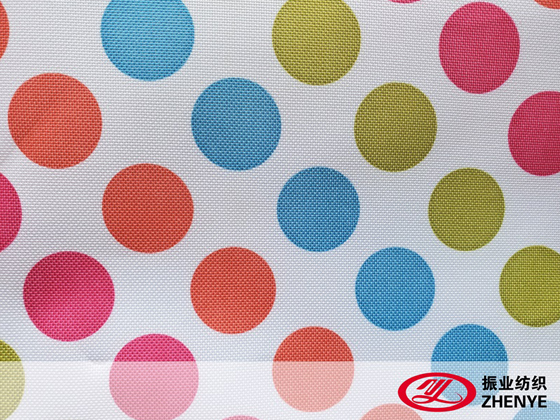
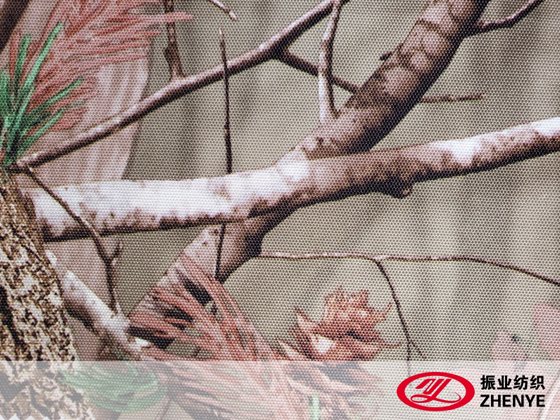
.jpg "300D Oxford Fabric PU")
-1.jpg "300D Oxford Fabric")
-1.jpg "ZY-677 600D Linen Type Cationic Fabric (WR)")
-2.jpg "ZY-5768 600D Linen Type Cationic Fabric (WR)")

